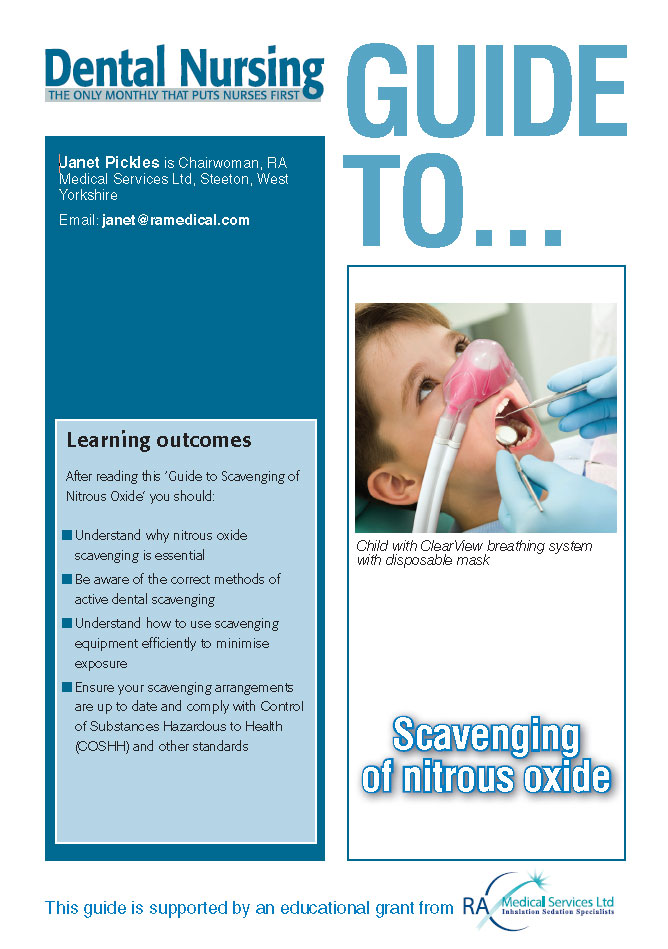
A scavenging system, simply defined, is a means to collect and remove excess gases to prevent them from being vented back into the operating room. Installation of an efficient scavenging system is the single most important step in reducing trace gas concentrations — and it has been demonstrated that ambient concentrations can be lowered by 90% through the use of an efficient system. This guide covers the regulations, the methods, and the equipment you need to stay compliant and keep your team safe.
What you'll learn
- Understand why nitrous oxide scavenging is essential in any practice that uses inhalation sedation.
- Be aware of the correct methods of active dental scavenging and how they differ from passive systems.
- Understand how to use scavenging equipment efficiently to minimise staff exposure.
- Ensure your scavenging arrangements are up to date and comply with COSHH and other standards.
A scavenging system, simply defined, is a means to collect and remove excess gases to prevent them from being vented back into the operating room.
Installation of an efficient scavenging system is the most important step in reducing trace gas concentrations. The National Institute for Occupational Safety and Health (1996) reported that ambient concentrations can be lowered by 90% through the use of an efficient system.
For dental inhalation sedation specifically, an active scavenging system is one in which a flow is generated through the patient's nasal mask, carrying away the waste gases exhaled by the patient. This flow is in the order of 45 L/min and is achieved by connection of the mask (via a suitable flow-limiting adaptor) to either a dental vacuum system, or directly to an active scavenging system (BS/EN) wall terminal.
Passive scavenging systems (older, 22 mm corrugated hose designs) are no longer considered adequate for modern practice and should be replaced.
UK recommendations include the Standards in Conscious Sedation for Dentistry (Society for the Advancement of Anaesthesia in Dentistry, 2000). The standard states:
> "There should be adequate scavenging of waste gases where inhalation sedation is used, since inadequate scavenging may result in unacceptable risks to health of the dental team. Adequate scavenging of gases should not rely on window opening or air conditioning alone and it should conform to current standards."
The relevant UK regulations and guidance documents are:
- The Control of Substances Hazardous to Health Regulations 2002 (COSHH) — establishes the duty to control exposure to hazardous substances, including nitrous oxide.
- Health Technical Memorandum 02-01: Medical Gas Pipeline Systems (DH, 2006) — Chapter 10 covers anaesthetic gas scavenging disposal systems (AGSDS), with Appendix L covering dental scavenging specifically.
- HSE workplace exposure limit (WEL) — 100 ppm over an 8-hour time-weighted average.
- SAAD Standards in Conscious Sedation for Dentistry (2000).
- NIOSH Technical Report: Control of Nitrous Oxide in Dental Operatories (1996).
A simple combination of a Miniscav and an active breathing system can remove all concerns about compliance with these standards.
There are three methods of generating the 45 L/min extraction flow rate required at the nasal mask:
- Connection to a suitable dental vacuum system — using the high-volume port, subject to it being externally vented and capable of sustaining the 45 L/min draw during the sedation procedure.
- Connection to a centralised anaesthetic gas scavenging system — directly to the terminal by a special AGS probe adapter, but with no air break in-line.
- Connection to a Miniscav — a standalone dedicated scavenger unit. Any of the standard breathing systems can be used with these systems.
All three methods are acceptable. The choice between them depends on the existing infrastructure of your practice:
- Practices with a high-volume dental vacuum that is externally vented typically use method 1.
- Practices with a hospital-style piped AGS system (rare outside hospitals) use method 2.
- Most modern dental practices use method 3 — a Miniscav or similar standalone unit — because it is independent of the surgery vacuum and can be specified to the exact 45 L/min flow rate.


To demonstrate compliance with COSHH and the HSE workplace exposure limit, a practice should be able to show:
- A risk assessment for nitrous oxide exposure, reviewed annually.
- An active scavenging system delivering 45 L/min at the nasal mask.
- A regular monitoring programme — typically a diffusion pen worn by the clinician for the duration of a session, or periodic measurements with a gas analyser such as the Geotech G200.
- Adequate room ventilation — typically 12–15 air changes per hour, or supplementary low-level extract fans.
- A maintenance and service schedule for the scavenging equipment.
The HSE-recommended maximum exposure limit is 100 ppm over an 8-hour TWA. With appropriate active scavenging and good room ventilation, this level is straightforward to achieve.
Where inhalation sedation is used, it is recommended that nitrous oxide levels are monitored periodically, depending on the extent of usage, to ensure exposure complies with the HSE recommendation of 100 ppm.
Two practical methods:
- Diffusion pen — attached to the lapel of a clinician's uniform and worn for the length of the sedation session. At the end of the session, the pen is sent to a lab for analysis. This is a low-cost option suitable for annual or biannual checks.
- Gas analyser (e.g. Geotech G200) — a portable instrument that records background and breathing-zone levels in real time. More expensive, but gives immediate results and is useful when commissioning a new surgery layout or following any changes to the scavenging setup.
R A Medical can advise on monitoring programmes and can put you in touch with a lab that processes diffusion pens.
R A Medical supplies a complete range of active scavenging equipment:
- Miniscav — our standalone active scavenger, designed and built in the UK. Delivers a consistent 45 L/min flow and works with any standard breathing system.
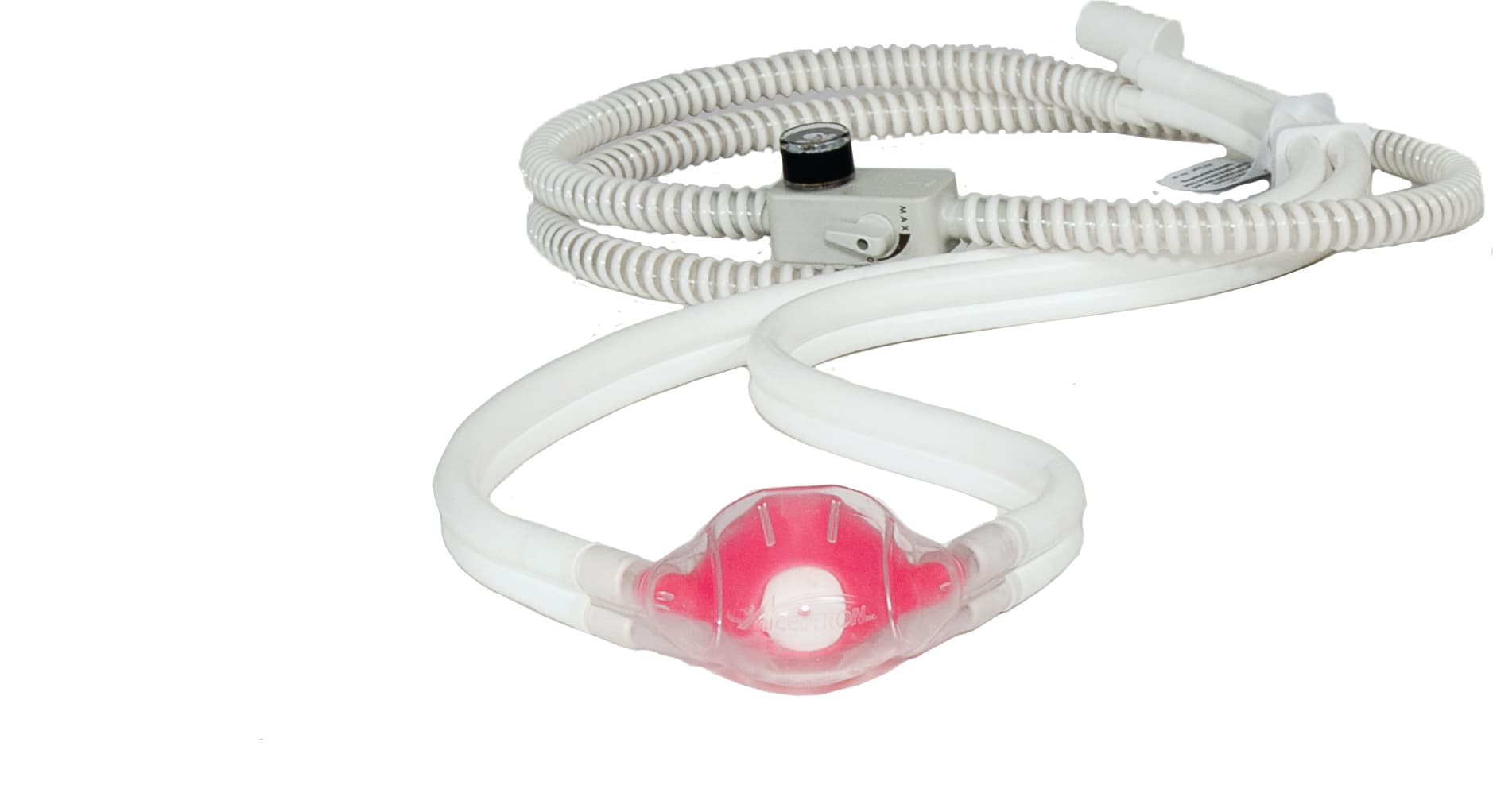
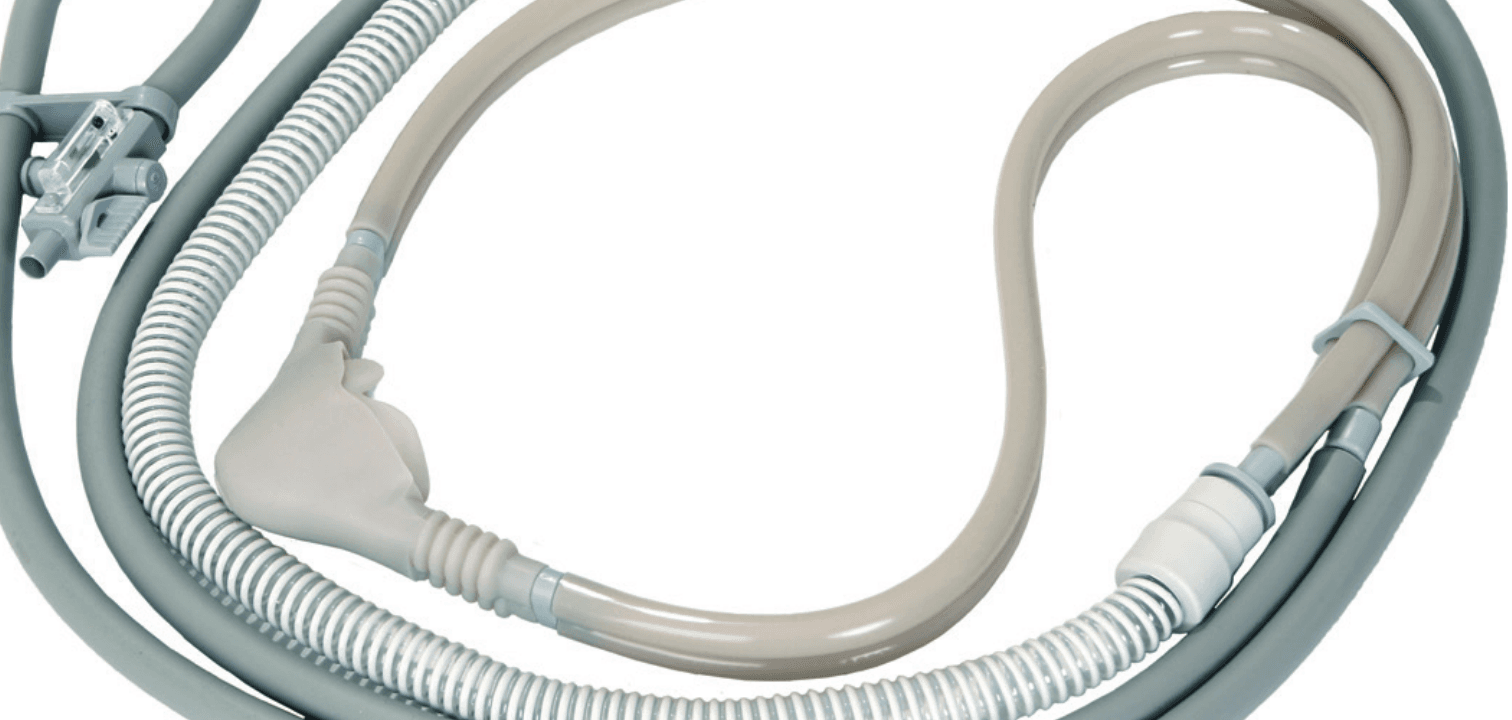
- Porter Brown Double Mask — an autoclavable breathing system with an inner and outer hood that gives a much better face-seal than older single-mask designs, dramatically reducing leak into the surgery atmosphere.
- Accutron ClearView — disposable single-use nasal hoods for practices that prefer not to autoclave.
- Active breathing system assemblies for all major flowmeter brands.
A Miniscav paired with an active breathing system is the simplest, most reliable way to achieve compliance. For sizing a new surgery, upgrading an existing one, or specifying a new-build practice, call Janet on 01535 652 444.
Key takeaways
- Active scavenging at 45 L/min at the nasal mask is the standard. Passive systems are obsolete.
- The HSE workplace exposure limit is 100 ppm over 8 hours. With active scavenging and good ventilation, this is straightforward to achieve.
- A Miniscav + active breathing system (Porter Brown Double Mask or ClearView) is the simplest compliant setup for most UK dental practices.
References
- Health and Safety Executive. Workplace exposure limits: EH40.
- Department of Health (2006). Medical Gas Pipeline Systems. Health Technical Memorandum 02-01. DH, London.
- Department of Health (2007). Specialised Ventilation for Healthcare Premises. Health Technical Memorandum 03-01. DH, London.
- HM Government (2002). The Control of Substances Hazardous to Health Regulations 2002 (COSHH). The Stationery Office, London.
- National Institute for Occupational Safety and Health (1996). Control of Nitrous Oxide in Dental Operatories. CDC, Atlanta.
- Society for the Advancement of Anaesthesia in Dentistry (2000). Standards in Conscious Sedation for Dentistry. SAAD, London.
Originally developed as a sponsored educational supplement in Dental Nursing magazine. Re-published by R A Medical Services Ltd with all third-party branding removed.


