
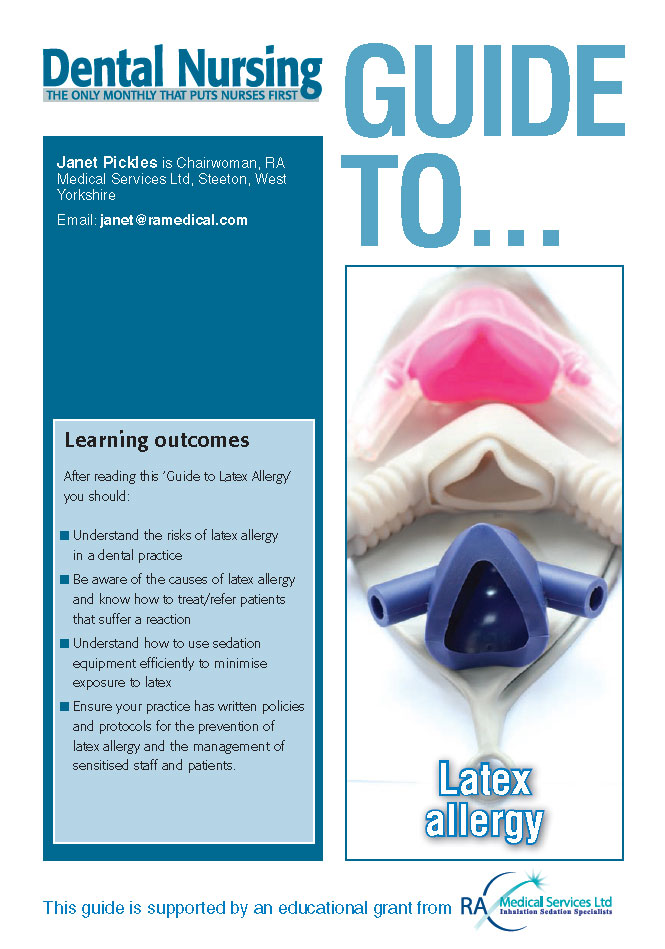
Latex allergy is a recognised occupational health issue in healthcare. Dental teams and patients can be exposed to natural rubber latex through gloves, masks, breathing-system components and a range of other equipment. This guide looks at the causes, diagnosis and management of latex allergy, and the practical steps a practice should take to protect sensitised staff and patients.
What you'll learn
- Understand the risks of latex allergy in a dental practice.
- Be aware of the causes of latex allergy and know how to treat or refer patients who suffer a reaction.
- Understand how to use sedation equipment efficiently to minimise exposure to latex.
- Ensure your practice has written policies and protocols for the prevention of latex allergy and the management of sensitised staff and patients.
Natural rubber latex (NRL) allergy is an immune-system reaction to proteins found in natural rubber latex. Reactions range from mild skin irritation (irritant contact dermatitis) to immediate, life-threatening anaphylaxis (Type I hypersensitivity).
Three recognised types of reaction:
- Irritant contact dermatitis — the most common. Caused by skin irritation from glove powder, detergents or repeated hand washing. Not a true allergy.
- Allergic contact dermatitis (Type IV) — a delayed reaction, typically 24–48 hours after exposure. Caused by the chemicals used in latex manufacture.
- Immediate hypersensitivity (Type I) — the most serious. Caused by the latex proteins themselves, with reactions occurring within minutes. Symptoms range from hives and wheezing to full anaphylaxis.
Dental teams are at higher risk than the general population because of frequent glove use and prolonged contact with NRL-containing equipment.

Latex is more widespread in the dental surgery than many practices realise. Common sources include:
- Examination and surgical gloves — the most obvious source. Powdered gloves aerosolise the proteins, increasing inhalation risk.
- Nasal hoods and breathing-system components — older reusable breathing systems may contain natural rubber in the hood, the reservoir bag or the tubing.
- Local anaesthetic cartridges — the bung at the cartridge end may contain latex.
- Rubber dam — natural rubber.
- Tubing on suction devices and evacuation systems — natural rubber.
- Bite blocks, mouth props, head rests — some products use natural rubber.
- Adhesive tapes and dressings — some contain latex.
- Equipment O-rings and gaskets — including bodok seals on cylinder yokes.
A full audit of your practice, room by room, is the first step in understanding your exposure.

For a known latex-allergic patient:
- Schedule them as the first case of the day, when aerosolised latex protein levels are at their lowest.
- Use a latex-free surgery if available, or thoroughly clean the surgery the night before and allow it to air overnight.
- Ensure all team members are aware and that latex-containing items have been removed from the room.
- Use non-latex gloves (nitrile) throughout.
- Have a latex-free emergency kit immediately available, including a latex-free resuscitation bag and mask.
- Know the signs of anaphylaxis and have a written protocol for managing it.
- Document the allergy clearly in the patient record, with a red flag in the notes.
The Resuscitation Council UK publishes a detailed anaphylaxis algorithm — all clinical staff should be familiar with it.

If a team member develops symptoms suggestive of latex allergy, refer them to occupational health for assessment. Sensitised staff should:
- Avoid direct contact with NRL gloves and equipment. Use nitrile or other non-latex alternatives.
- Be aware of powdered gloves in the practice — the powder aerosolises the protein, increasing risk to colleagues in the same room.
- Carry a MedicAlert or warning card in case of emergency, so that other healthcare providers are aware of the allergy.
- Know the practice's latex-free equipment locations and how to access them.
A practice that moves to powder-free, low-protein gloves significantly reduces the risk to all staff, not just those known to be sensitised. This is the single most effective practice-level intervention.
A good practice protocol covers:
- A list of all NRL-containing products in use, with a plan to phase them out where alternatives exist.
- A schedule for replacing powdered gloves with powder-free low-protein alternatives.
- A patient-screening protocol to identify latex allergy on the medical history form.
- A clear procedure for managing a known latex-allergic patient.
- An anaphylaxis management protocol, with regular team training.
- An incident-reporting procedure for any latex-related reactions in staff or patients.
The protocol should be reviewed annually. R A Medical can advise on latex-free alternatives for inhalation sedation equipment — most modern breathing systems are now fully latex-free.
Key takeaways
- Latex allergy is a recognised occupational health issue. Powdered gloves are the single biggest risk factor for aerosolised exposure.
- For a known latex-allergic patient, schedule them first thing in the morning and use a latex-free surgery.
- Switching to powder-free, low-protein gloves protects the whole team, not just sensitised staff.
References
- Health and Safety Executive. Latex allergies in the workplace.
- Resuscitation Council UK. Emergency treatment of anaphylaxis.
- British Dental Association. Medical histories and latex allergy.
Originally developed as a sponsored educational supplement in Dental Nursing magazine. Re-published by R A Medical Services Ltd with all third-party branding removed.


