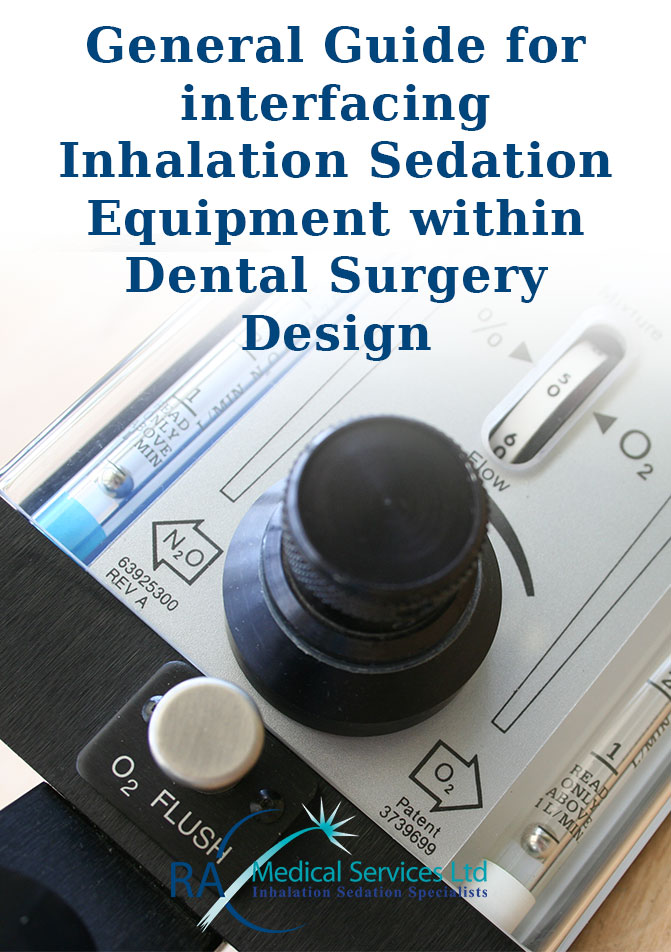
A dental surgery running inhalation sedation has three pieces of equipment that have to interface correctly with each other: a dedicated flowmeter, an active scavenging system, and the medical gas pipeline. Get any one of the three wrong and the system either will not work safely or will not pass an inspection. This guide walks through the practical interfacing considerations for each, in the order you need to think about them when specifying or refurbishing a surgery. The original content was first issued as a customer information sheet in 2014 and has been updated for the R A Medical website.
What you'll learn
- Identify the three elements of equipment that have to come together in any inhalation sedation surgery.
- Match the right flowmeter mounting to your surgery layout.
- Apply the 45 L/min scavenging flow requirement at the nasal mask.
- Compare active and passive scavenging, and understand why passive systems are now obsolete.
- Choose between the three venting options (HVE, AGSS terminal, Miniscav) for your practice.
- Position the medical gas and scavenging terminals in the right place for the flowmeter to reach.
Any inhalation sedation surgery needs three pieces of equipment, and they have to interface with each other:
- Dedicated inhalation sedation flowmeter — analogue or digital. The unit the operator titrates the gas mix on.
- Active dental scavenging — picks up the exhaled nitrous oxide at the nasal mask and carries it out of the building. Required to operate at 45 L/min at the mask.
- Medical gas pipeline — oxygen and nitrous oxide, delivered either from a pipeline (hospital / multi-surgery) or from cylinders on a mobile stand.
None of the three is useful on its own. The flowmeter needs a gas supply and a scavenging connection. The scavenging needs a vacuum source and an exhaust route. The medical gas pipeline needs to terminate somewhere the flowmeter can reach. This guide is about getting the three to meet.
There are approximately seven dedicated inhalation sedation flowmeter types in circulation in the UK and Irish marketplace. With one exception, all of them have to be mounted in the correct operating angle.
Flowmeters currently in production:
- MDM, DMDM, C3000 MXR — manufactured by Porter Instruments (USA), formerly Cyprane, Fraser Sweatman and Matrx.
- Mc1 — manufactured by McKesson / Cestradent (UK).
- Ultra and Newport — manufactured by Accutron (USA). The Newport is a floor-standing model and does not require separate mounting.
Flowmeters no longer in production but still in service:
- Quantiflex Mark I (Cyprane) — declining in numbers but still found in older surgeries.
- Quantiflex Mark II (Cyprane, Fraser Sweatman) — analogue, found in many long-established practices.
Mounting compatibility
Most flowmeters accept a similar range of mounting options, but the support arms and brackets are not interchangeable. The list below covers the common options and which flowmeters fit them.
- 4-cylinder mobile stand — fits MDM, DMDM, QRA Mark II, MXR, Mc1 and Ultra. The most flexible option. Cylinders live on the stand and travel with the unit.
- Tall stand (pipeline only) — for surgeries running on pipeline gas supply. Same flowmeter compatibility as above. A mounting peg is also required.
- Low stand (pipeline only) — same fit list, lower profile. Used where surgery cabinetry limits the height.
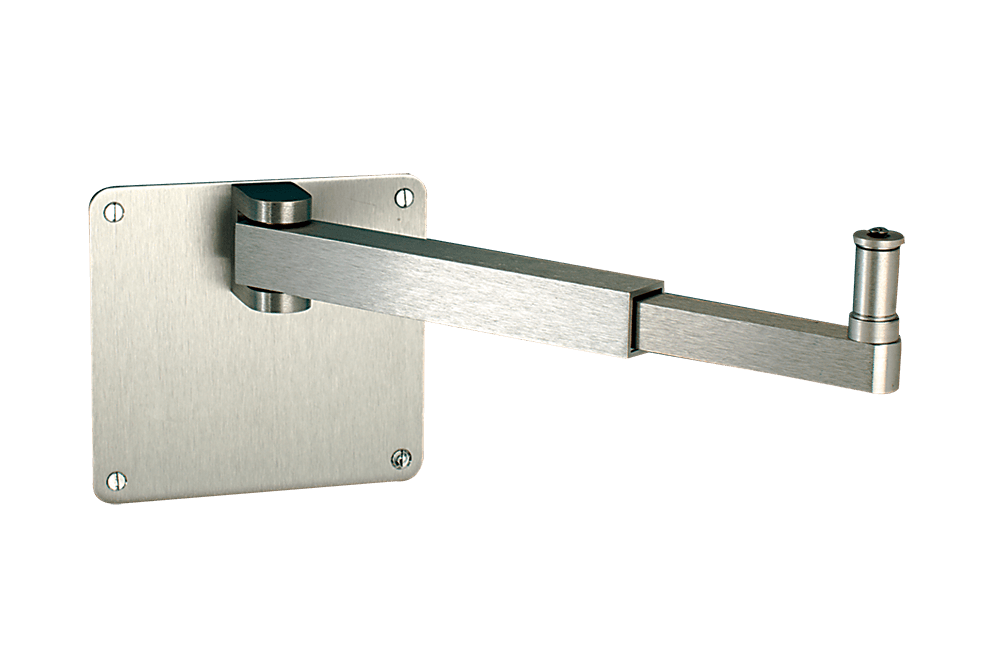
- Swing-arm bracket — wall- or cabinet-mounted, holds the flowmeter at the correct operating angle. Fits MDM, DMDM, QRA Mark II, MXR, Mc1 and Ultra. Common in surgeries with fixed cabinetry.
- Cabinet mount — built into the cabinetry at the head of the chair. Fits MDM, DMDM, QRA Mark II and MXR. Best option where a dedicated cabinet has been specified.
If you are specifying a new surgery, the swing-arm bracket and the cabinet mount are the cleanest options. The mobile 4-cylinder stand is the easiest retrofit, but it does occupy floor space and has to be moved between surgeries.


The single number to remember is 45 L/min. This is the air flow rate at the nasal mask that an effective scavenging system must achieve, throughout the procedure. It is the figure cited in the NIOSH Technical Report Control of Nitrous Oxide in Dental Operatories, and is the basis for the guidance in HTM 02-01 (Department of Health) for active dental scavenging.
HTM 02-01 Chapter 10 makes the position clear: “Active Scavenging for dental installation is an entirely different concept. An active system is one in which there is a flow generated through the patient’s nasal mask and this carries away the waste gases exhaled by the patient. This flow is in the order of 45 L/min and is achieved by connection of the mask (via a suitable flow-limiting adaptor) to either a dental vacuum system or directly to an active scavenging system (BS/EN) wall terminal.”
The corollary, from the NIOSH report, is just as important: “Installation of an efficient scavenging system is the most important step in reducing trace gas concentrations. It has been demonstrated that ambient concentrations have been lowered by 90 percent through the use of an efficient system.”
The practical upshot: an efficient scavenging system lowers ambient N₂O to around 10% of what it would otherwise be. That is the difference between a surgery that passes a COSHH check and one that does not. A diffusion pen check costs very little and demonstrates the result directly.
There are two generations of dental scavenging to be aware of:
Passive scavenging — the original system, on the marketplace for around 40 years. A 22 mm corrugated hose ran from the fresh-gas outlet to a nasal hood on the patient’s face. A one-way valve opened on expiration and the patient’s own expiratory effort pushed the waste gas out through a second length of tubing. The tubing was either hung out of a window or connected to a low-level wall vent. Some later installations connected it to a wall-mounted AGSS via a receiver.
Passive systems have a hard upper limit on the air flow rate at the nasal mask of around 0.5 L/min (BS 6834:1987). They are not capable of reaching the 45 L/min target and are not effective. Porter Instruments announced in January 2010 that they were discontinuing the passive breathing system with immediate effect, and the system is now considered obsolete for dental application. If your surgery is still running one, it should be replaced.
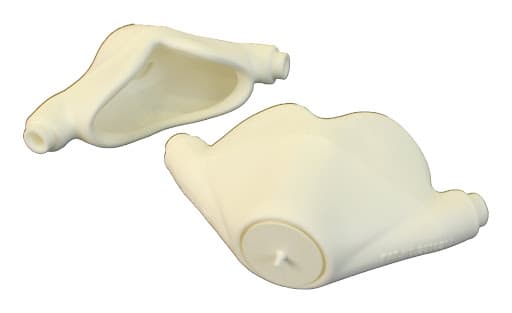
Active scavenging — designed from the outset to operate at 45 L/min. Smaller-bore, thicker-walled tubing than the passive circuit. Three commonly seen types: the Porter Brown, the A.N.S. (Autoclavable Nitrous Scavenger), and the Accutron system. The Porter Brown is by some margin the most widely used in the UK. The A.N.S. system is factory pre-set to deliver 45 L/min at 3 in. Hg and is not customer-adjustable. The Accutron system uses autoclavable or scented single-patient-use nasal hoods with a clear collector cap or a double mask such as the Clearview.
For a deeper comparison of the three, see our Scavenger Breathing Systems overview and the scavenging guide.
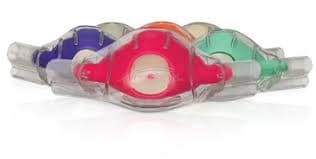
The most critical practical decision in an active scavenging installation is how the waste gas is vented from the surgery. There are three options. Not all are suitable for every surgery.
1. Dental vacuum system (HVE)
All active scavenging systems were originally designed to connect to a dental vacuum system, and this is still the most common arrangement in the United States. The system has to be capable of sustaining 45 L/min during the procedure and must be vented externally from the surgery. In practice this means using the high-volume evacuator (HVE) port.
The catch: most dental surgeries only have one HVE port. If the chair-mounted HVE is also being used for restorative work, you cannot use it simultaneously for scavenging. Some chair manufacturers (ADEC is the most prominent) now offer a dual-HVE option on selected models, but this is a factory fit and is expensive to retrofit.
A second caveat: not every dental vacuum is suitable. The waste gases are exhausted through the vacuum motor, and on some models the brush arcing in the motor can be a problem. We do not recommend the Tridac (Aspirade) units for active scavenging. Always check with the equipment manufacturer first.
2. AGSS wall terminal
Larger facilities — hospitals, health centres, multi-surgery clinics — may already have an Anaesthetic Gas Scavenging System (AGSS) installed. A remote pump serves any number of AGSS terminals. They are balanced and normally used for general anaesthesia, with an air break (Barnsley receiver) in-line.
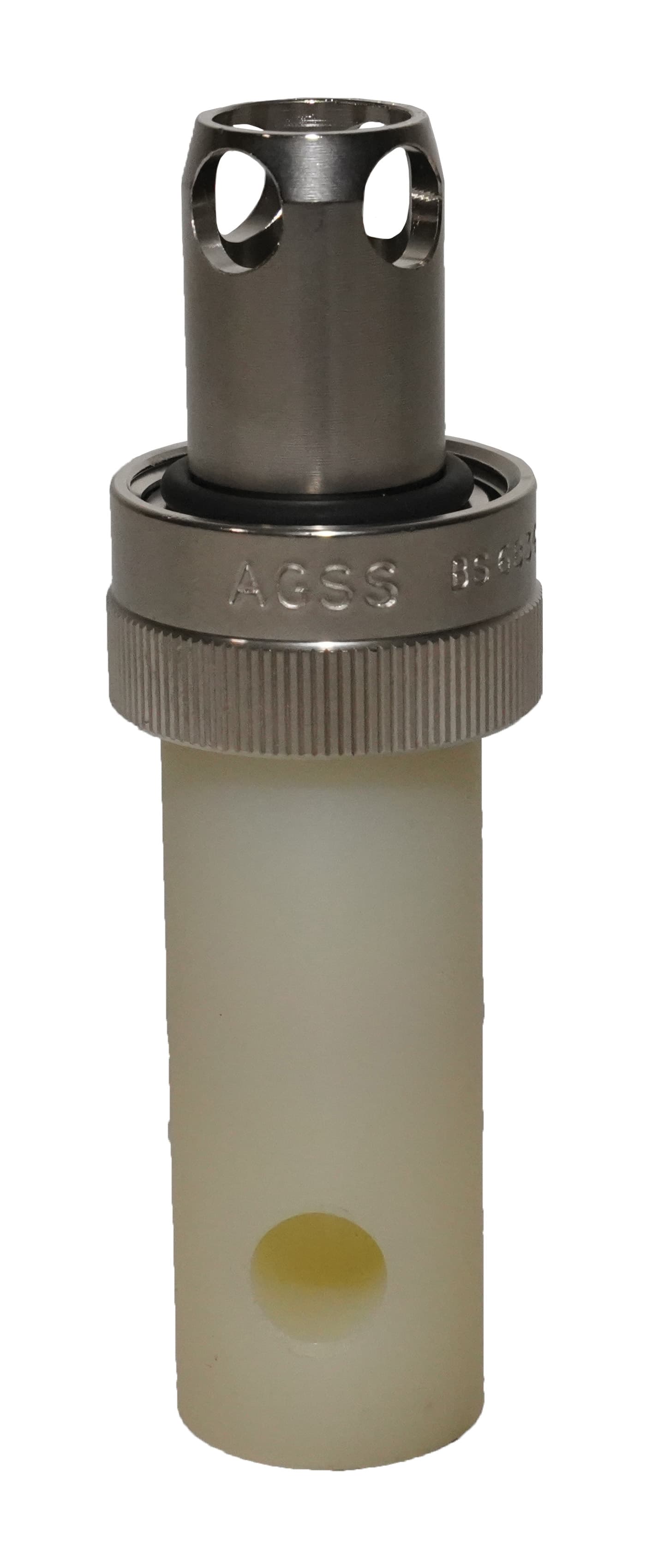
The air break is the catch. It limits the maximum draw to 0.5 L/min (BS 6834:1987) — well short of the 45 L/min target for active dental scavenging. The standard AGSS terminal cannot be used as-is. The solution is a simple AGSS adapter: a stainless-steel AGSS probe and a specially turned connecting element that fits directly into the self-sealing valve of the AGSS terminal, bypassing the air break. The flow on the breathing system is then adjusted at the system flow-limiter (e.g. the vacuum control block on the Porter Brown). The mini flowmeter block on the breathing system shows a green area; the bobbin should sit in the green with the mask firmly on the patient’s face.
If the AGSS is already in place, this is the ideal connection method. The downside is the cost — AGSS systems are expensive to install and maintain, and are only really cost-effective for multi-surgery sites.
3. Miniscav unit
The Miniscav was designed specifically for active dental scavenging in a single surgery. It is small, quiet (48 dB), and easy to install — it needs a normal 240 V socket and a 16 mm external vent hole for the rigid venting assembly (15 mm). The vent must discharge well away from any ventilation inlets or opening windows to keep the exhaust out of the building.
The Miniscav works particularly well with the Porter Brown system. It is also compatible with the ANS and Accutron systems. Maintenance is straightforward: an annual check after the first year, and a service exchange (including replacement hosing) in the second year.


There is no published guidance in HTM 02-01 for terminal placement when used with inhalation sedation equipment — the standard is written for general anaesthesia. This is unfortunate, because getting the terminal placement wrong is one of the most common — and most expensive — mistakes made when refurbishing a sedation surgery.
In one case we know of, a row of terminals (oxygen, nitrous oxide and AGSS) was placed on the surgery wall directly across the room from the chair head, and was therefore totally inaccessible. The surgery had to be re-worked at significant cost.
Where to put the flowmeter
The flowmeter is best located in the triangular area out from the dental chair head, usually in a dedicated cabinet (suggested width 500 mm) or in the knee-space area formed by the cabinetry return. The mounting is then either a swing-arm bracket or a cabinet mount, depending on the flowmeter type.
Where to put the gas terminals
With the flowmeter position decided, the medical gas terminals (oxygen and nitrous oxide) sit in the rear of the cabinetry, at a height and orientation that lets them interface cleanly with the flowmeter supply hoses. Most flowmeters are supplied with one-metre hoses, which is the right length for typical installations — long enough to allow the head to be positioned without tangling, short enough to avoid wear from excess length.
For oxygen and nitrous oxide alone, the orientation is not critical, but the height is. The HTM 02-01 guidance on terminal orientation can be followed when only the two medical gas terminals are present.
Where to put the AGSS terminal (if used)
The position changes once an AGSS terminal is added. Two issues: orientation and height.
- Orientation. The AGSS terminal should be on the side of the cabinetry furthest from the flowmeter. This contradicts the HTM 02-01 ordering, but it is necessary so that the breathing-system vacuum tubing does not become entangled with the oxygen and nitrous oxide supply hoses. The team needs to be able to see the vacuum control block and tubing at all times during the procedure — that is impossible if the medical gas hoses are in the way.
- Height. The AGSS terminal should be at least 12 inches (300 mm) below the underside of the work surface. This is to allow correct placement of the vacuum control block and the vacuum hose loop (to prevent hose kinking). HTM 02-01 does not address this.
The bottom line
For most practices, the Miniscav approach is the simplest: no AGSS terminal, no air-break problem, no terminal placement puzzle. The waste gas is vented through a 16 mm wall fitting and the surgery plumbing is the standard medical gas pipeline plus a standard 240 V socket.
For larger facilities with an existing AGSS, the AGSS terminal + adapter approach works well, but the terminal placement has to be planned in detail before the cabinetry is installed.
If in doubt, contact R A Medical Services on 01535 652 444 or email info@ramedical.com. We have seen most of the ways this can go wrong, and can usually spot the issue on a plan before the cabinetry goes in.
Key takeaways
- Three pieces of equipment have to come together: a dedicated flowmeter, active scavenging at 45 L/min, and a medical gas supply. None of the three is useful on its own.
- The flowmeter mounting has to be specified to match the flowmeter type. Mobile stand, swing-arm bracket and cabinet mount are the three common options.
- Active scavenging is mandatory. Passive systems have been obsolete since 2010 and should be replaced.
- The waste gas has to be vented outside the building. The three options — HVE, AGSS terminal with adapter, or Miniscav — are not equally suitable for every practice.
- Medical gas and AGSS terminal placement is the single most common source of costly mistakes. Plan the cabinetry around the flowmeter position, not the other way around.
References
- Department of Health (2006). Medical Gas Pipeline Systems. HTM 02-01. DH, London. Chapter 10: Anaesthetic Gas Scavenging Disposal Systems.
- NIOSH (1994). Control of Nitrous Oxide in Dental Operatories. NIOSH Technical Report. Cincinnati: National Institute for Occupational Safety and Health.
- British Standards Institution. BS 6834:1987. Specification for active anaesthetic gas scavenging systems.
Originally issued as a customer information sheet (RAM/IP/002/2014). Converted to a guide format for the R A Medical website and updated for the 2026 catalogue.


